- English
- Español
- Português
- русский
- Français
- 日本語
- Deutsch
- tiếng Việt
- Italiano
- Nederlands
- ภาษาไทย
- Polski
- 한국어
- Svenska
- magyar
- Malay
- বাংলা ভাষার
- Dansk
- Suomi
- हिन्दी
- Pilipino
- Türkçe
- Gaeilge
- العربية
- Indonesia
- Norsk
- تمل
- český
- ελληνικά
- український
- Javanese
- فارسی
- தமிழ்
- తెలుగు
- नेपाली
- Burmese
- български
- ລາວ
- Latine
- Қазақша
- Euskal
- Azərbaycan
- Slovenský jazyk
- Македонски
- Lietuvos
- Eesti Keel
- Română
- Slovenski
- मराठी
- Srpski језик

How Can a Projector Lifter Change the Way a Modern Presentation Space Feels?
Article Summary
There are plenty of rooms that technically have a projector, yet still feel unfinished. The image may be clear, but the ceiling looks crowded. The equipment works, but maintenance is awkward. The room can host a presentation, but it never fully escapes the look of a temporary setup. That is usually the point where people begin to understand the value of a Projector Lifter.
This article looks at the buying question from a practical point of view rather than a catalog point of view. Instead of only asking what a Projector Lifter is, we ask what it fixes, why it matters in real commercial spaces, what buyers should pay attention to before making a decision, and why more projects now treat hidden projection systems as part of the room design itself. Along the way, we will also discuss how Guangzhou Junnan Audiovisual Technology Co,.Ltd. fits into this conversation for buyers who need a more reliable and polished AV solution.
Table of Contents
- Outline
- Why does projector installation still frustrate so many buyers?
- What makes a Projector Lifter more than just a moving bracket?
- Where does a Projector Lifter make the biggest difference?
- What should buyers check before choosing one?
- Why is it often better than a fixed mounting method?
- Why does supplier experience matter so much in this product category?
- FAQ
Outline
- The real-world inconvenience behind ordinary projector mounting
- How a Projector Lifter improves both function and appearance
- Typical room types that benefit from concealed projector systems
- The key product and project details buyers should evaluate
- Why fixed solutions often fall short in refined AV environments
- The importance of choosing a manufacturer that understands application needs
Why does projector installation still frustrate so many buyers?
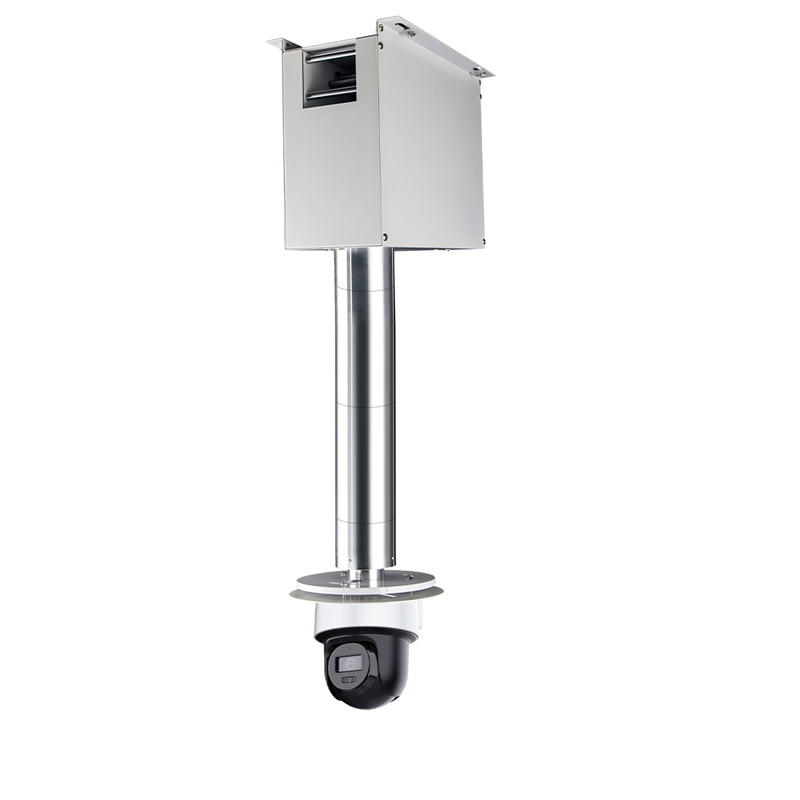
On paper, projector installation sounds simple. You pick the device, decide where the image should land, mount the unit, run the cables, and move on. But once the room is in actual use, the little compromises begin to pile up. The projector hangs lower than expected. It interrupts the ceiling lines. It becomes awkward to clean or adjust. And when someone looks up during an important presentation, the first thing they notice is not the screen, but the machinery above them.
That disconnect is more common than many buyers admit. A space can be well furnished, properly lit, and carefully planned, but one exposed projector can still make the environment feel unfinished. This is especially true in boardrooms, hotel meeting spaces, training rooms, lecture halls, and high-end residential media rooms. In these settings, presentation quality is only part of the story. The room itself also needs to look intentional.
Maintenance creates another layer of trouble. A fixed ceiling-mounted projector may work perfectly on day one, but equipment does not stay untouched forever. Sooner or later, someone has to inspect it, clean it, check the wiring, adjust the position, or replace the unit. If the system is hard to reach, even basic maintenance becomes a small project of its own. That means more disruption, more labor, and more chances for mistakes.
Then there is the issue buyers rarely talk about at the beginning: room identity. Some rooms are expected to serve several roles. A conference room may host internal meetings in the morning, client presentations in the afternoon, and event activity in the evening. A training space may need to feel technical one hour and open the next. A permanently visible projector does not adapt well. It keeps the room stuck in one visual mode.
The real problem is not that a projector is visible. The real problem is that traditional mounting often forces the room to accommodate the equipment, when a well-designed space should make the equipment feel naturally integrated.
That is exactly why more buyers have started to look beyond standard brackets. They are no longer just asking how to install a projector. They are asking how to install one without damaging the room experience.
What makes a Projector Lifter more than just a moving bracket?
A Projector Lifter sounds straightforward at first. It raises and lowers a projector, usually from within the ceiling, so the equipment can stay hidden when not in use and descend when projection is needed. But if we stop at that description, we miss the real reason people buy it.
The value of a Projector Lifter is not motion alone. Its value lies in what that motion allows the room to become.
When a projector can disappear into the ceiling, the room immediately feels calmer. The visual focus shifts back to architecture, lighting, and the presentation itself. In commercial settings, that can have a surprisingly strong effect. Clients notice when a room feels clean and controlled. Executives notice when the equipment does not dominate the environment. Designers appreciate when ceiling lines remain uninterrupted. Even users who know nothing about AV products can tell the difference between a room that feels tidy and one that feels crowded.
There is also a practical side that matters just as much. A concealed system is often easier to manage over time because access becomes more deliberate. Instead of climbing awkwardly toward a fixed position, technicians can bring the projector down to a workable height. Alignment, service, inspection, and replacement become less frustrating. In real projects, that can translate into smoother maintenance routines and less interruption to room schedules.
Another advantage is coordination. In a modern presentation environment, projection rarely stands alone. It sits alongside screens, control systems, conference cameras, speakers, and other integrated hardware. A Projector Lifter helps the projector behave like part of an organized system instead of a device that was simply hung overhead and left there.
| What Buyers Usually Want | What a Fixed Mount Often Delivers | What a Projector Lifter Can Offer |
|---|---|---|
| A clean, high-end ceiling appearance | Permanent equipment exposure | Concealed equipment when not in use |
| Convenient maintenance | Hard-to-reach service position | Easier access through controlled lowering |
| Flexible room identity | Space always looks technical | Room can return to a cleaner, multi-purpose look |
| More refined user experience | Functional but visually intrusive setup | Balanced performance and aesthetics |
So no, a Projector Lifter is not just a moving bracket. It is a way of solving a design problem, an access problem, and a usability problem all at once.
Where does a Projector Lifter make the biggest difference?
Some products only make sense in niche projects. This is not one of them. A Projector Lifter is useful in a surprisingly wide range of environments, especially anywhere the room needs to look polished while still performing as a serious presentation space.
Corporate boardrooms are an obvious example. In these rooms, meetings are not only about communication. They are also about impression. When investors, clients, or senior leadership walk in, the environment says something before anyone begins speaking. A visible projector can make even an expensive room feel slightly improvised. A concealed lifting system keeps the ceiling composition cleaner and the atmosphere more deliberate.
Training centers and educational spaces benefit for a different reason. These rooms are used frequently, sometimes by many different people, and service convenience matters. If a projector must be adjusted or maintained, a lift system can make that work less disruptive. Over time, that matters more than people expect.
Hotels and function venues are another strong fit. One hall may host a conference in the morning, a product launch in the afternoon, and a banquet in the evening. In that situation, flexibility is everything. The room should not look permanently tied to one technical purpose. A hidden projector system allows the space to change character more gracefully.
Luxury homes and villa projects have their own logic. Buyers in this segment usually do not want visible hardware to compete with interior design. They want performance, of course, but they also want the room to stay elegant. That is where a Projector Lifter becomes less of a commercial accessory and more of an architectural choice.
- Boardrooms and executive meeting spaces where appearance affects professional image
- Lecture halls and classrooms where maintenance access matters
- Training centers that need regular use with manageable upkeep
- Hotels and multi-function halls where the room must shift between different identities
- Government and institutional projects where orderly design and durable use both matter
- Home theaters and villas where buyers want technology without visual clutter
The common thread is easy to spot. These are all spaces where the equipment must work well, but it must not dominate the environment.
What should buyers check before choosing one?
One reason buyers get disappointed with this category is that they shop too generally. They look at a product name, a photo, and a lifting range, then assume that is enough. It rarely is. A Projector Lifter should be selected according to the project, not just according to the catalog page.
The first thing to confirm is the projector itself. Its size, weight, and installation requirements will affect the type of lifting structure that makes sense. Then comes the ceiling condition. Available depth, structural support, finish style, and access points all matter. A lifter that sounds good in theory may not suit the actual site.
Noise level is another issue that deserves more attention. People often underestimate how noticeable mechanical sound can be in a quiet room. In a classroom, conference room, or presentation venue, a noisy lifting action immediately lowers the perceived quality of the whole system. Smooth, controlled, low-noise performance is not a luxury detail. It directly affects how professional the room feels.
Buyers should also consider how the system will be used after installation. Will the projector stay in frequent use? Will technicians need regular access? Does the room connect to a broader automation or central control setup? Does the project require customization because of non-standard dimensions or design expectations? These questions often matter more than the basic product label.
| Buying Factor | Why It Deserves Attention | A Better Buyer Question |
|---|---|---|
| Projector size and weight | Determines structural suitability and operating safety | Is this model genuinely matched to my projector, not just roughly compatible? |
| Ceiling depth and structure | Defines what can be installed realistically | Will this solution fit the actual ceiling condition on site? |
| Operating noise | Affects perceived quality in quiet spaces | Will movement feel smooth and discreet during real use? |
| Maintenance access | Influences long-term convenience and service time | Will future inspection and adjustment be easy or annoying? |
| Control compatibility | Matters in integrated AV environments | Can this fit into the room's broader control logic? |
| Customization support | Prevents mismatch in project-based orders | Can the supplier adapt the product for project-specific needs? |
In short, the smartest buyers do not ask only, “How much does it cost?” They ask, “How well will this actually work in my room six months after installation?” That is a much better question.
Why is it often better than a fixed mounting method?
To be fair, fixed mounting still has a place. In very basic spaces with low visual expectations and easy service access, it can be enough. But many modern AV environments are no longer that simple. Once the room needs to feel polished, adaptable, and thoughtfully integrated, the weaknesses of a fixed mount become difficult to ignore.
A fixed mount solves the problem of placement. A Projector Lifter solves the problem of placement, visibility, maintenance access, and spatial presentation at the same time. That difference is exactly why the two solutions should not be treated as equivalent options with different prices. They reflect different ideas about what the room is supposed to achieve.
A room with a fixed projector says, “The equipment is here, so we made space for it.” A room with a concealed lift system says, “The technology is here, but the room is still in control.” That may sound subtle, but when people experience the space, they feel the distinction immediately.
This is why many buyers stop looking at lift systems as an unnecessary extra once they see the full picture. The question changes from “Do I really need this?” to “Can I still achieve the room standard I want without it?” In many cases, the honest answer is no.
A fixed mount is usually about installation. A Projector Lifter is usually about the room as a whole.
Why does supplier experience matter so much in this product category?
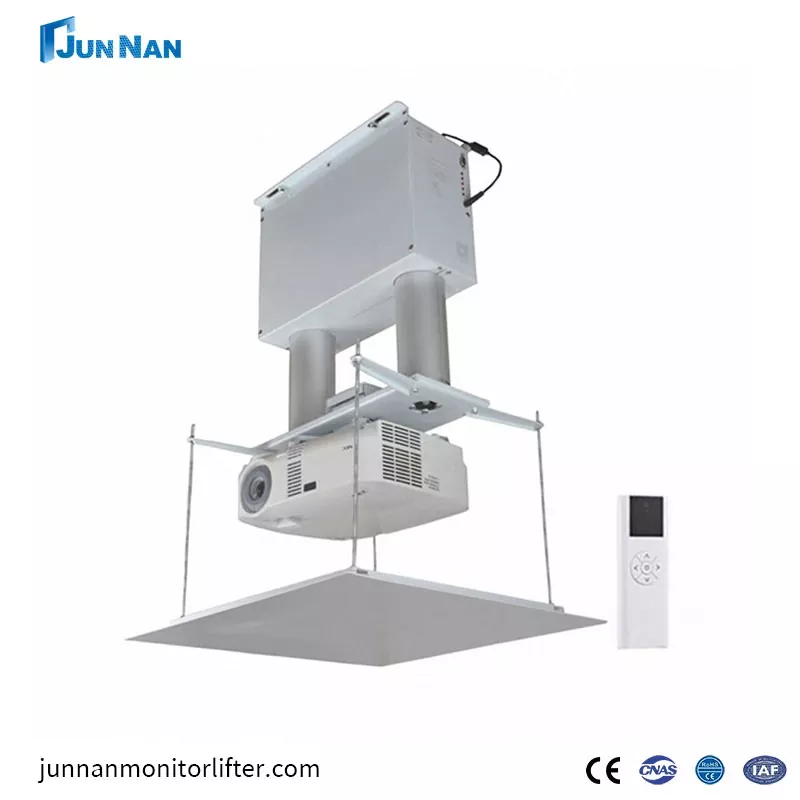
This is one of those products where supplier experience matters more than some buyers first assume. The reason is simple: the success of the project depends on more than the hardware itself. It depends on whether the product can be matched correctly to the projector, the ceiling, the room purpose, and the broader AV plan.
That is why many professional buyers prefer working with manufacturers that understand application scenarios, not just model numbers. Guangzhou Junnan Audiovisual Technology Co,.Ltd. is relevant here because the company focuses on audiovisual equipment solutions rather than treating lift products as isolated accessories. For project buyers, that wider understanding can reduce miscommunication and improve specification accuracy.
If the order involves a standard room with common dimensions, selection may be straightforward. But many real projects are not like that. They involve custom ceilings, integrated control needs, visual design expectations, or engineering constraints that require a more thoughtful recommendation. In those situations, buyers benefit from working with a supplier that sees the installation in context.
That broader support becomes especially valuable for importers, contractors, wholesalers, and integrators who are balancing deadlines, client expectations, and installation realities at the same time. The right product matters, but the right guidance matters too.
And that, in the end, is why a Projector Lifter is usually judged by more than its lifting function. Buyers care about how quietly it moves, how cleanly it integrates, how easily it can be serviced, and how confidently the supplier can support the project from inquiry to implementation.
What are the most common questions buyers ask about a Projector Lifter?
Is a Projector Lifter only suitable for large commercial projects?
No. It is often used in commercial environments, but it can also be a very good choice for villas, private theaters, and smaller meeting spaces where appearance and equipment concealment matter.
Does a Projector Lifter make maintenance easier?
In many cases, yes. One of the most practical advantages is that the projector can be brought to a more accessible position for inspection, cleaning, or adjustment.
What information should I provide before asking for a quotation?
You should ideally provide projector dimensions, equipment weight, ceiling depth, desired lifting distance, room type, and any special installation or control requirements.
Is it mainly an aesthetic product?
No. A cleaner appearance is a major benefit, but buyers also choose it for access convenience, room flexibility, and better integration into modern AV environments.
Why not just use a cheaper fixed mount?
Because the cheaper option may solve only the first installation step while leaving future problems untouched. If the project values design quality, service convenience, and a more refined room experience, a lift system often makes far more sense.
A good presentation space should not feel like a compromise between technology and design. It should feel complete. That is exactly why more buyers now take the Projector Lifter seriously as part of the room solution rather than treating it as an optional extra. If you are looking for a more polished way to manage projection in conference rooms, education spaces, event venues, or residential AV projects, Guangzhou Junnan Audiovisual Technology Co,.Ltd. can help you match the right lifting solution to your actual project needs. For product details, customization support, and a quotation tailored to your application, please contact us.